
Melbourne Property Market 2026: Opportunity Hiding in Plain Sight
Melbourne has had a harder few years than it deserved. Post-COVID disruption, a state government that changed the land tax rules mid-cycle, and a sustained period of investor exodus created something unusual in a major capital city: genuine value. While the rest of the country was racing upward, Melbourne’s market softened — and for investors willing to look past the noise, that softening is exactly the setup counter-cyclical strategy is built for.
What the Numbers Actually Say
Melbourne’s median house value sits around $900,000 to $950,000 — below Sydney by a wide margin and, remarkably, now below Brisbane in some comparable suburb metrics. For a city of Melbourne’s size, employment depth, and quality of life profile, this represents a meaningful discount to where fundamentals say it should be. Markets that trade below fundamental value do not stay there indefinitely. They correct. The question is whether you are positioned before or after that correction.
The Land Tax Exodus Created a Buyer’s Market
Victoria’s land tax changes hit investor confidence hard. Properties that made sense under one tax regime suddenly pencilled differently, and a cohort of investors sold down. The consequence of that selling — less competition at auction, more motivated vendors, more days on market — is still present in parts of Melbourne’s established middle ring. Buyers who move now are facing fewer competing bids than they would have in 2021 or 2022. That is not a permanent condition.
Rental Demand Is Recovering Strongly
The inner-city apartment market, which struggled during the height of COVID-era vacancy, has recovered. International students are back at Melbourne’s universities in large numbers. Young professionals are returning to the inner suburbs. Rental demand for well-located, reasonably priced apartments in Fitzroy, Brunswick, Richmond, and South Yarra is strong. For investors who held through the difficult period, yields have rebounded. For investors entering now, the entry price and the yield math are more attractive than they were two years ago.
Growth Corridors Worth Watching
Melbourne’s geography creates several distinct growth stories. The inner-north — suburbs like Northcote, Preston, Coburg — has long been popular with owner-occupiers and increasingly with investors as affordability pressure pushes demand outward from Fitzroy and Carlton. The inner-east remains resilient. South-east Melbourne’s corridor offers newer stock at more accessible price points with strong rental yield. Each of these areas carries different risk and return profiles, which is why entry strategy matters more than suburb selection alone.
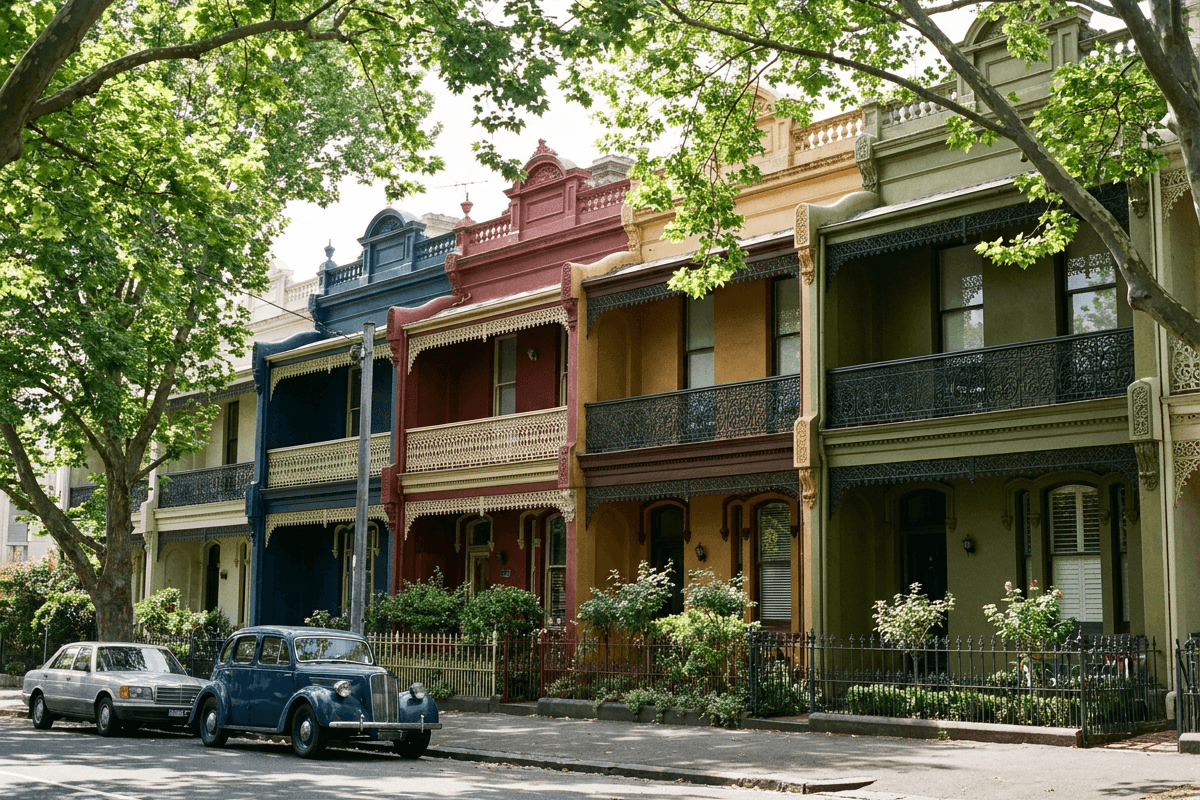
Melbourne’s inner suburbs — established, in-demand, and now genuinely accessible for investors
Melbourne’s Recovery History Is Instructive
Melbourne has underperformed before — briefly after the GFC, during periods of supply oversupply in the apartment market — and it has recovered strongly each time. The city’s employment base, cultural infrastructure, and population trajectory do not support permanent underperformance. The question for investors is not whether Melbourne recovers. It is whether you are in position when it does.
The Living Property Partners Perspective
Melbourne is one of the clearest counter-cyclical opportunities in Australia right now. Sentiment is soft. Fundamentals are sound. The gap between where Melbourne trades and where it should trade, based on its size and economic profile, is real and historically unusual. We approach Melbourne with a clear framework: established suburbs, strong rental demand, realistic yield, and a vendor who has motivation to deal.
Book a free consultation with Living Property Partners to explore whether Melbourne belongs in your strategy.
Our latest articles